


Media has become one of the most powerful influences in modern life. Twenty-four-hour news stations, celebrities, politicians, influencers, and endless entertainment now dominate the airwaves and screens in our homes, schools, cars, and pockets.
Finally, many of these same voices are beginning to acknowledge and report on the growing technology epidemic and the harmful effects of excessive screen use — especially among children and teens.
But the real question remains:
Will simply talking about the problem inspire families, schools, and communities to truly pay attention and take action?
Awareness alone is not enough.
We must develop intentional technology and screen awareness before the unhealthy side effects become even more difficult to reverse. Young people especially need to understand the value of time because screen time is not “free time.” Once time is lost to endless scrolling, gaming, and passive entertainment, it can never be recovered.
Where Does Your Family Rank?
Consider the reality of a typical day:
Most people need approximately 8 hours of sleep.
Adults often work 5–8 hours or more.
Children require school, movement, exercise, meals, social interaction, hobbies, and responsibilities to develop healthy life skills.
Now add 5 or more hours of recreational screen use to that schedule.
Something will eventually suffer. (See table, The Common Sense Census)
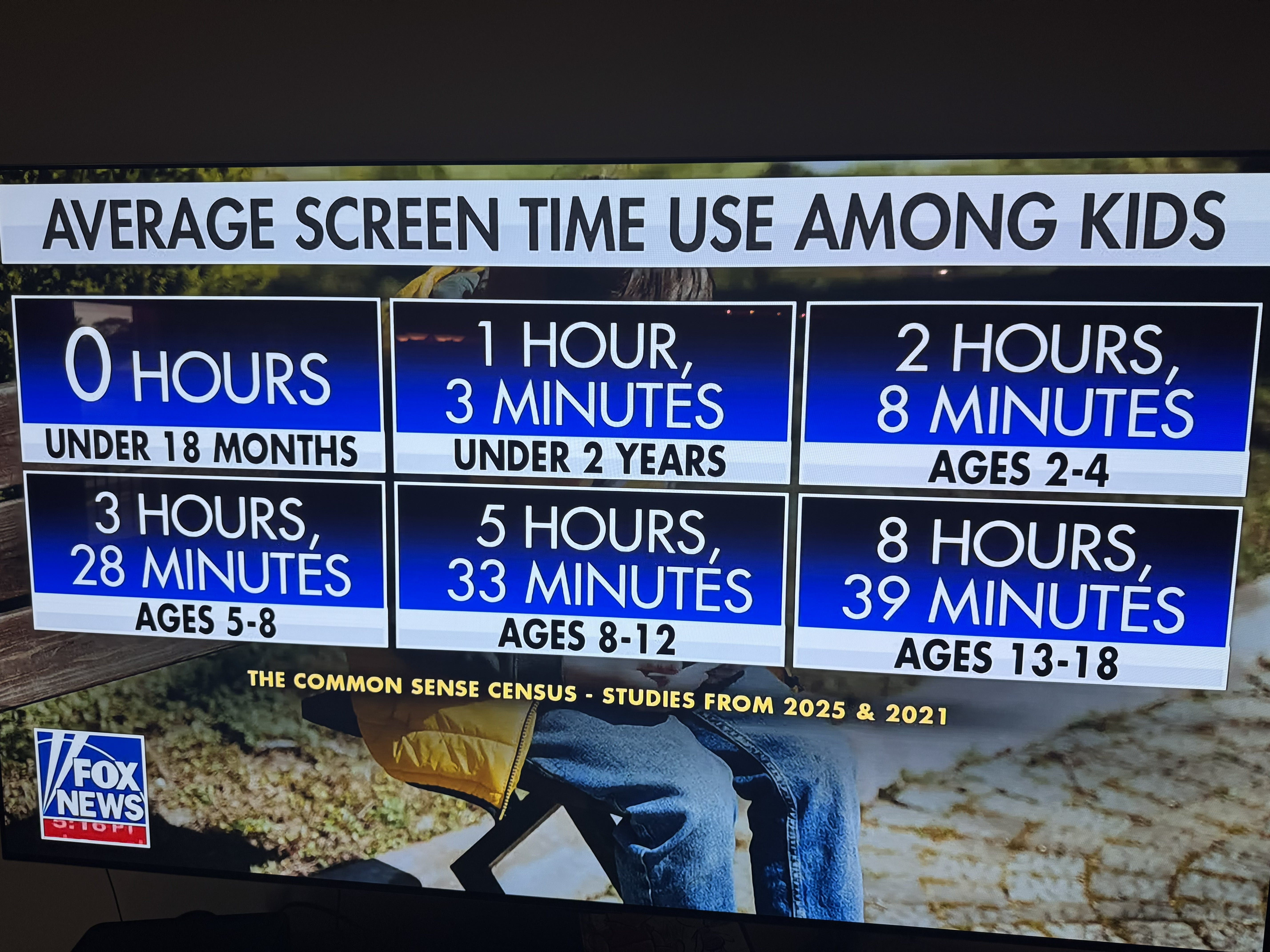
For many children, excessive screen use replaces:
physical activity,
real conversation,
creativity,
responsibility,
sleep,
and emotional development.
By age 8, many children are already sacrificing necessary healthy life experiences because screens have become their primary source of entertainment and comfort.
The Consequences Are Already Here
Many of the dangers connected to screen overuse are still underreported or ignored.
We are already witnessing:
texting while driving accidents,
mood swings,
anxiety,
anger,
isolation,
shortened attention spans,
unhealthy dependency,
and sadly, even suicide.
Artificial Intelligence also introduces new concerns. AI can instantly provide information on nearly every topic — from nutrition and medicine to parenting and mental health — yet many users have no reliable way to verify the accuracy or authenticity of what they are consuming.
Technology can be a valuable tool, but without discipline and balance, tools quickly become unhealthy distractions.
Screens Can Provide Pleasure — But Not Purpose
We cannot replace meaningful human experiences with endless digital stimulation.
Comfort is easy. Purpose takes effort.
No screen, no video game, and no social media platform can truly give a person lasting purpose. They may provide temporary pleasure, entertainment, distraction, or escape — but purpose is built through:
relationships,
responsibilities,
movement,
service,
faith,
teamwork,
struggle,
discipline,
and real-world experiences.
We urgently need a stronger message that captures the attention of families, schools, and communities before unhealthy screen habits become permanent lifestyles.
No one is exempt from these effects. Every age group is impacted.
But the greatest concern should be the youngest generation. We are now raising toddlers who can sit motionless for hours, mesmerized by screens before they can even fully communicate, socialize, or explore the world naturally.
That is not healthy.
And it is not normal.
The Big “D” — Discipline
Do not expect technology or entertainment companies to slow things down for us.
Families must lead with intention and discipline.
Sometimes fear can motivate necessary change, especially when the consequences are real. Without early identification and intervention, those struggling with screen addiction may eventually lack essential life skills such as:
cooking,
communication,
personal hygiene,
emotional regulation,
maintaining employment,
problem-solving,
and healthy relationship building.
The solution is not eliminating technology completely. The solution is balance, boundaries, and discipline.
The 5 D’s of Healthy Screen Use
(See Table, Surgeon General’s Warning On The Harms of Screen Use)
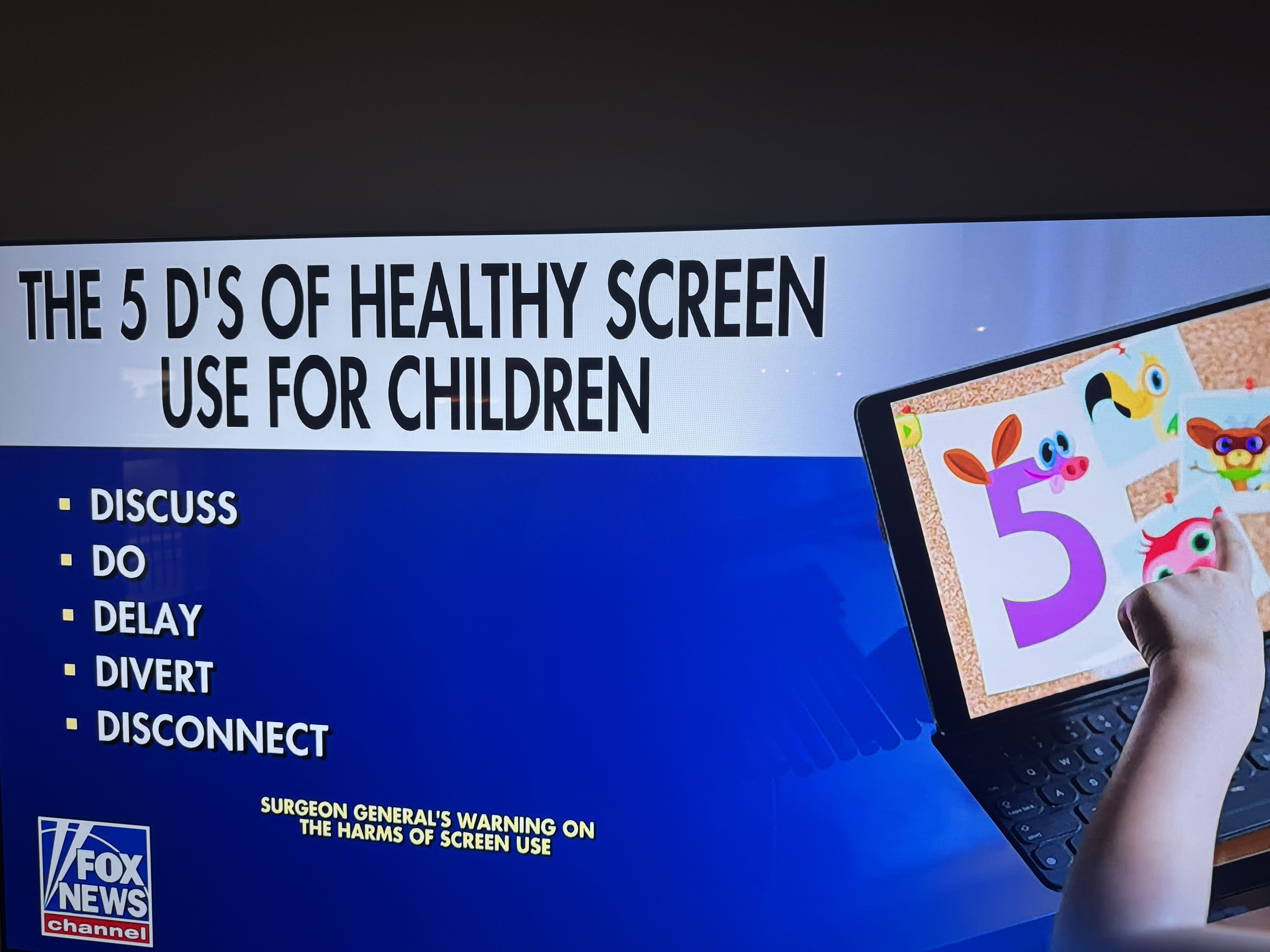
These five habits can help guide healthier technology use while preventing unnecessary difficulties in life:
1. Discuss
2. Do
3. Delay
4. Divert
5. Disconnect
Discipline.
Everyone — especially children — deserves the opportunity to build a life outside the virtual world.
Real life is waiting.