
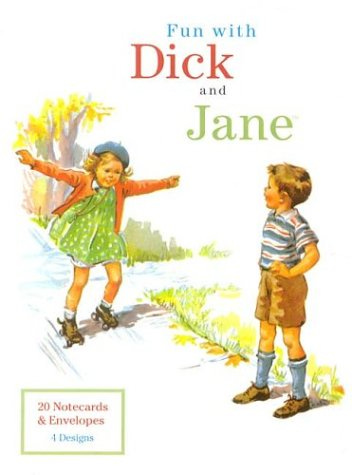
Fun with Dick and Jane
Learning Brings Joy


Never accept the narrative that we are raising a generation that finds learning “boring” and work meaningless.
We’re hearing it everywhere—declining scores in reading, writing, and math. The explanations vary: COVID disruption, weakened curricula, too much screen time, not enough human teaching. And yet, the proposed solutions often miss the mark, chasing quick fixes for what is being labeled as “boredom.”
Maybe it’s time to go back to basics.
Long before screens dominated attention, classrooms were built on structure, discipline, and accountability. The work mattered. The outcomes mattered. And learning itself held value.
Educator William S. Gray helped shape that foundation. His Dick and Jane readers became a cornerstone of American education for decades—simple, structured, and effective across all levels of learners. No one argued the material needed to entertain. It was expected to teach.
And it did.
Former U.S. Secretary of Education William J. Bennett reinforced a truth we can’t afford to ignore: education is not just about academics—it’s about character. Courage, perseverance, responsibility, discipline, compassion, honesty, and friendship are not optional. They are essential.
Boredom is not the problem.
It’s a symptom.
When we invest our most valuable asset—time—with intention, presence, and purpose, boredom fades. When we ask better questions—What? When? How? Why?—we spark critical thinking. And when those conversations happen face-to-face, we build trust, connection, and a genuine love of learning.
Let’s be honest:
No screen, no video game, no shortcut will fix boredom or raise test scores.
Only focus.
Only discipline.
Only human connection.
If a child is bored, we must challenge the leadership around them—parents, teachers, coaches, caretakers. Growth requires engagement, accountability, and real dialogue. Without it, we risk turning every challenge into something to medicate, rather than something to solve.
Here are three simple ways to re-engage and inspire young minds:
1. Set Goals on Paper
Write down short-, mid-, and long-term goals.
Plan the steps. Set a timeline.
Review progress and celebrate completion.
2. Start a Book & Drama Club
Visit a library or bookstore together.
Choose a book and schedule discussions.
Pair it with a play, movie, or museum experience.
3. Build a Hobby or Fitness Routine
Encourage hands-on learning.
Introduce a new sport, craft, or skill.
Demonstrate, participate, and talk through the process.
The challenge isn’t boredom—it’s how we choose to spend time.
We don’t have a lost generation.
We have a generation ready to lead, create, and write the next chapter.
Maybe even the next Dick and Jane.